Chinese phrases for travel: what to learn before your trip
If you learn only ten things before a trip to China, make them these: 你好 nǐ hǎo, hello; 谢谢 xièxie, thank you; 不好意思 bù hǎoyìsi, excuse me; 对不起 duìbuqǐ, sorry; 这个 zhège, this one; 多少钱 duōshao qián, how much; 不要 bú yào, no thanks; 厕所在哪儿 cèsuǒ zài nǎr, where is the toilet; 听不懂 tīng bu dǒng, I don’t understand; and 好 hǎo, OK. With those and a finger to point, you can get through most of a day. Below are the phrases for each part of a trip, the ones you’ll hear back, and the signs worth recognising.
Hear every word, then learn it. All the words on this page are in Hanzio’s free dictionary, with their sound and a guide to pronouncing them: where your tongue and lips go for each sound. Hanzio then teaches you the ones you choose.
Disclosure: we make Hanzio. The sources for the facts are at the end of the post.
The ten to learn first
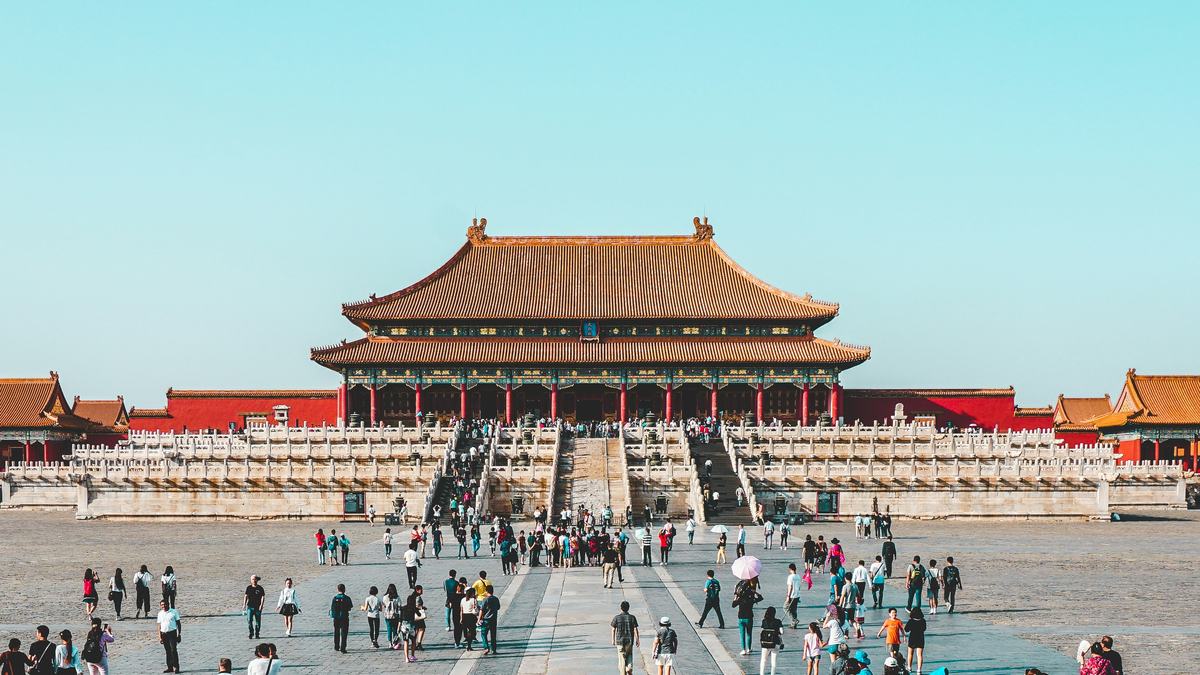
These cover most of a day: greeting, thanking, apologising, choosing, paying and finding the toilet.
| Chinese | Meaning |
|---|---|
| 你好 nǐ hǎo | hello Also how you call a waiter or a shop assistant. |
| 谢谢 xièxie | thank you The reply is 不客气 bú kèqi, you’re welcome. |
| 不好意思 bù hǎoyìsi | excuse me; sorry To get past someone, to get attention, or after a small bump. |
| 对不起 duìbuqǐ | sorry A real apology, for when something went wrong. |
| 这个 zhège | this one Point and say it: at a menu, a counter, a ticket window. |
| 多少钱? duōshao qián? | how much is it? The answer comes in 块 kuài: see the numbers below. |
| 不要 bú yào | I don’t want it; no, thanks 不要,谢谢 turns down anyone selling something. |
| 厕所在哪儿? cèsuǒ zài nǎr? | where is the toilet? 洗手间 xǐshǒujiān is politer, nice in a restaurant or a hotel; both are understood everywhere. |
| 听不懂 tīng bu dǒng | I don’t understand Literally “hear but not understand”: what you heard was too fast or too hard. |
| 好 hǎo | OK; good 好的 hǎo de is the same “OK”, a little softer. |
Of the two apologies, 不好意思 is the one you’ll use all day, to squeeze past someone or to start a question. Keep 对不起 for when something has really gone wrong.
Eating out
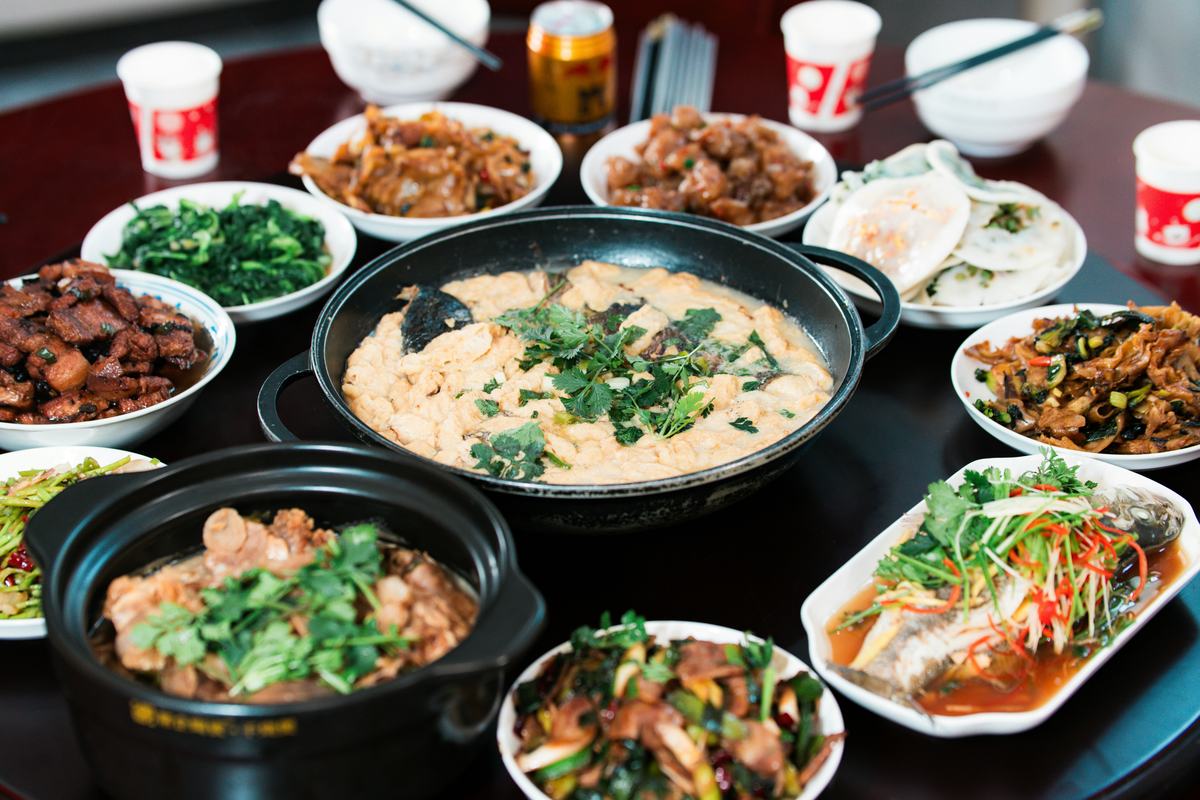
Restaurants are where you’ll use your Chinese most. Many have picture menus, and some a QR code on the table to order from your phone; where they don’t, 这个 and a finger on the menu do the work.
| Chinese | Meaning |
|---|---|
| 菜单 càidān | menu |
| 我要这个 wǒ yào zhège | I’d like this one 我要 + a dish, or + 这个 and a finger on the menu. |
| 不要辣 bú yào là | not spicy, please 微辣 wēi là is “mildly spicy”, which can still be hot. |
| 不要糖 bú yào táng | no sugar, please In tea shops, 少糖 shǎo táng is less sugar. |
| 我不吃肉 wǒ bù chī ròu | I don’t eat meat |
| 冰的 bīng de | a cold one For drinks: they often come at room temperature. |
| 好吃 hǎochī | delicious The compliment every cook likes to hear. |
| 买单 mǎidān | the bill, please |
| 打包 dǎbāo | to take away For leftovers: ask for them in a box. |
What you’ll hear
| You’ll hear | Meaning |
|---|---|
| 几位? jǐ wèi? | how many of you? The first thing you hear at the door. Hold up your fingers. |
| 在这儿吃还是带走? zài zhèr chī háishi dàizǒu? | eat in or take away? |
Shopping and paying
Prices are written in 元 yuán, or with ¥, but people say 块 kuài: 二十块 èrshí kuài is 20 yuan. Shops and restaurants take payment by QR code, through Alipay or WeChat Pay, and visitors can link a foreign Visa or Mastercard card to either. Carry some cash as well.
| Chinese | Meaning |
|---|---|
| 太贵了 tài guì le | too expensive |
| 便宜一点 piányi yìdiǎn | a bit cheaper? At markets and stalls only. Shops with price tags don’t bargain. |
| 有…吗? yǒu … ma? | do you have …? |
| 有 / 没有 yǒu / méiyǒu | yes, we have / no, we don’t The answer to the question above, and to many others. |
| 现金 xiànjīn | cash |
What you’ll hear
| You’ll hear | Meaning |
|---|---|
| 微信还是支付宝? Wēixìn háishi Zhīfùbǎo? | WeChat or Alipay? How are you paying? Name the app you use. |
| 扫码 sǎomǎ | scan the code |
| 要袋子吗? yào dàizi ma? | do you want a bag? |
Getting around and the hotel
Keep your hotel’s name and address in Chinese characters on your phone: a taxi driver can read it at a glance, and 去这儿 does the rest. Hotels have to register foreign guests, so they ask for your 护照, passport, at check-in, and train tickets are bought and checked with it too.
| Chinese | Meaning |
|---|---|
| 我要去… wǒ yào qù … | I want to go to … |
| 去这儿 qù zhèr | take me here With the address on your phone, to a taxi driver. |
| 地铁站 dìtiězhàn | metro station |
| 火车站 huǒchēzhàn | train station |
| 机场 jīchǎng | airport |
| 酒店 jiǔdiàn | hotel |
| 护照 hùzhào | passport |
| WiFi 密码是多少? WiFi mìmǎ shì duōshao? | what’s the Wi-Fi password? Wi-Fi is said in English, roughly “wai-fai”. |
What you’ll hear
| You’ll hear | Meaning |
|---|---|
| 到了 dào le | we’re here What the driver says when you arrive. |
| 左边 / 右边 zuǒbian / yòubian | on the left / on the right |
| 一直走 yìzhí zǒu | go straight on |
In the north, and in Beijing above all, people add 儿 r to many words: 哪儿 nǎr, where, and 这儿 zhèr, here. In the south you’ll hear 哪里 nǎlǐ and 这里 zhèlǐ instead. Both are standard Chinese.
Sights and tickets
Tickets are counted with 张 zhāng, the measure word for flat things, and before a measure word, two is 两 liǎng, not 二 èr: two tickets is 两张, three is 三张 sān zhāng.
| Chinese | Meaning |
|---|---|
| 门票 ménpiào | entrance ticket |
| 两张 liǎng zhāng | two (tickets) 张 counts flat things such as tickets. |
| 几点关门? jǐ diǎn guānmén? | what time do you close? |
| 可以拍照吗? kěyǐ pāizhào ma? | can I take photos? |
Numbers
Prices, rooms, platforms and tickets all come in numbers, and the first ten build the rest.
| Number | Chinese | Number | Chinese |
|---|---|---|---|
| 1 | 一 yī | 6 | 六 liù |
| 2 | 二 èr | 7 | 七 qī |
| 3 | 三 sān | 8 | 八 bā |
| 4 | 四 sì | 9 | 九 jiǔ |
| 5 | 五 wǔ | 10 | 十 shí |
Eleven is 十一 shíyī, ten-one; twenty is 二十 èrshí, two-ten; and a hundred is 一百 yìbǎi. So 三十五块 sānshíwǔ kuài is 35 yuan.
Signs you’ll read
You can ask a person to say something again, but not a sign. These are the ones you’ll see most:
| Sign | Meaning |
|---|---|
| 入口 rùkǒu | entrance |
| 出口 chūkǒu | exit |
| 男 nán | men |
| 女 nǚ | women |
| 卫生间 wèishēngjiān | toilets Also 洗手间 or 厕所. |
| 推 tuī | push |
| 拉 lā | pull |
| 地铁 dìtiě | metro |
| 禁止吸烟 jìnzhǐ xīyān | no smoking 禁止, “forbidden”, comes before whatever is not allowed. |
| 小心 xiǎoxīn | careful As in 小心地滑, slippery floor. |
If you learn just two, make them 男 and 女.

When you’re stuck
Sometimes the most useful thing to say is that you didn’t understand, and to ask for it again, slower.
| Chinese | Meaning |
|---|---|
| 请问 qǐngwèn | excuse me, may I ask Start any question to a stranger with it. |
| 我不会说中文 wǒ bú huì shuō Zhōngwén | I don’t speak Chinese |
| 你会说英文吗? nǐ huì shuō Yīngwén ma? | do you speak English? |
| 请再说一遍 qǐng zài shuō yí biàn | please say that again |
| 慢一点 màn yìdiǎn | a bit slower, please |
In an emergency
Call 110 for the police, 120 for an ambulance and 119 for the fire service.
| Chinese | Meaning |
|---|---|
| 救命! jiùmìng! | help! |
| 医院 yīyuàn | hospital |
| 药店 yàodiàn | pharmacy |
Do the tones matter?
Mandarin has four tones and a neutral one, and they change the word: 买 mǎi is to buy, 卖 mài to sell. In a short phrase, with a menu in your hand, the context often lets people understand you even if a tone is off. But a tone can still turn one word into another, and tones are where learners slip: in our learners’ pinyin reviews, the usual mistake is the right syllable with the wrong tone.
Some tones change as you speak. When two third tones meet, the first one rises, so 你好, written nǐ hǎo, is said ní hǎo. And 不 bù becomes bú before a fourth tone, as in 不要 bú yào. The tables above write 不 and 一 as they are said, as the HSK word lists do.
Why not just use a translation app?
Use one: for a long conversation it is the right tool, and its camera can read a menu for you. But a phone has to come out, be typed into and be passed across, and much of a trip happens too fast for that: 谢谢 when someone holds a door, 不好意思 to get past, 多少钱 at a stall. You’ll say words like these every day.
A few words also change how people respond to you. Few foreigners speak any Chinese, so even a 你好 or a 谢谢 stands out, and speaking to people in their own language, even a little, helps you connect with them in a way an app can’t.
How to learn them before you go
There are about 60 phrases and signs on this page, plus the numbers. Start with the first ten, then the sections your trip needs. Say each one out loud, and review it the next day and again a few days later: it is the reviews, spread out, that make a phrase come out when you need it. At ten a day, the whole page takes a week.
About half the words in these phrases are among the 300 words of the new HSK 1, the first level of the official exam. But an exam doesn’t order its words for a trip: 厕所, toilet, and 辣, spicy, only come in at HSK 4, and 救命, help, at HSK 6.
Learning them with Hanzio
Every word on this page is in Hanzio’s dictionary, with its sound, so you can hear it before you say it. Add the ones you want, and the daily plan brings each back just before you would forget it, reviewing it by meaning, pinyin and tones, and listening.
And once you are in China, take a photo of a menu or a sign, or pick one you took, and the camera scan looks up the Chinese in it.
Frequently asked questions
Do I need to speak Chinese to travel in China?
No. In the big cities, airports and metros have signs in English, and a translation app gets you through a long conversation. Outside them little English is spoken, and a few words of Chinese make every day easier: ordering, paying and asking the way.
How do you say hello and thank you in Chinese?
Hello is 你好 nǐ hǎo, said with the first syllable rising: ní hǎo. Thank you is 谢谢 xièxie, and the reply is 不客气 bú kèqi, you’re welcome.
What is the most useful Chinese phrase for travel?
Probably 这个 zhège, this one: with a finger on a menu or a shelf, it orders food, buys things and picks a ticket. After it, 多少钱 duōshao qián, how much, and 谢谢 xièxie, thank you.
Will these phrases work in Taiwan and Hong Kong?
In Taiwan, yes: Mandarin is the official language there, written in traditional characters (謝謝 for 谢谢; see simplified vs traditional Chinese). In Hong Kong the everyday language is Cantonese: 88% of people aged five and over spoke it at home in the 2021 census, but more than half could also speak Mandarin.
Should I learn Chinese characters for a short trip?
Learn to recognise a few: 入口 and 出口, 男 and 女, and the name of your hotel’s metro station. To learn more than a handful, writing them from memory is the most reliable way to tell them apart, as our post on writing Chinese characters explains.
Learn them before you go
Hanzio has every word on this page, with its sound, and reviews them by meaning, pinyin and listening.