Do you really need to write Chinese characters?
Yes, if you want to read Chinese. In the first weeks you can get by with pinyin and by seeing characters often. But the more characters you learn, the more of them look alike and sound alike. Writing them from memory is the most reliable way to tell them apart, and it teaches you the parts characters are built from, which make every new character and word easier. You do not need beautiful handwriting: most of what you write, you will type.
Hanzio’s writing review asks you to write each word from memory, and characters break down into the parts they are built from, with memory hooks.
Disclosure: we make Hanzio. How we counted is explained below.
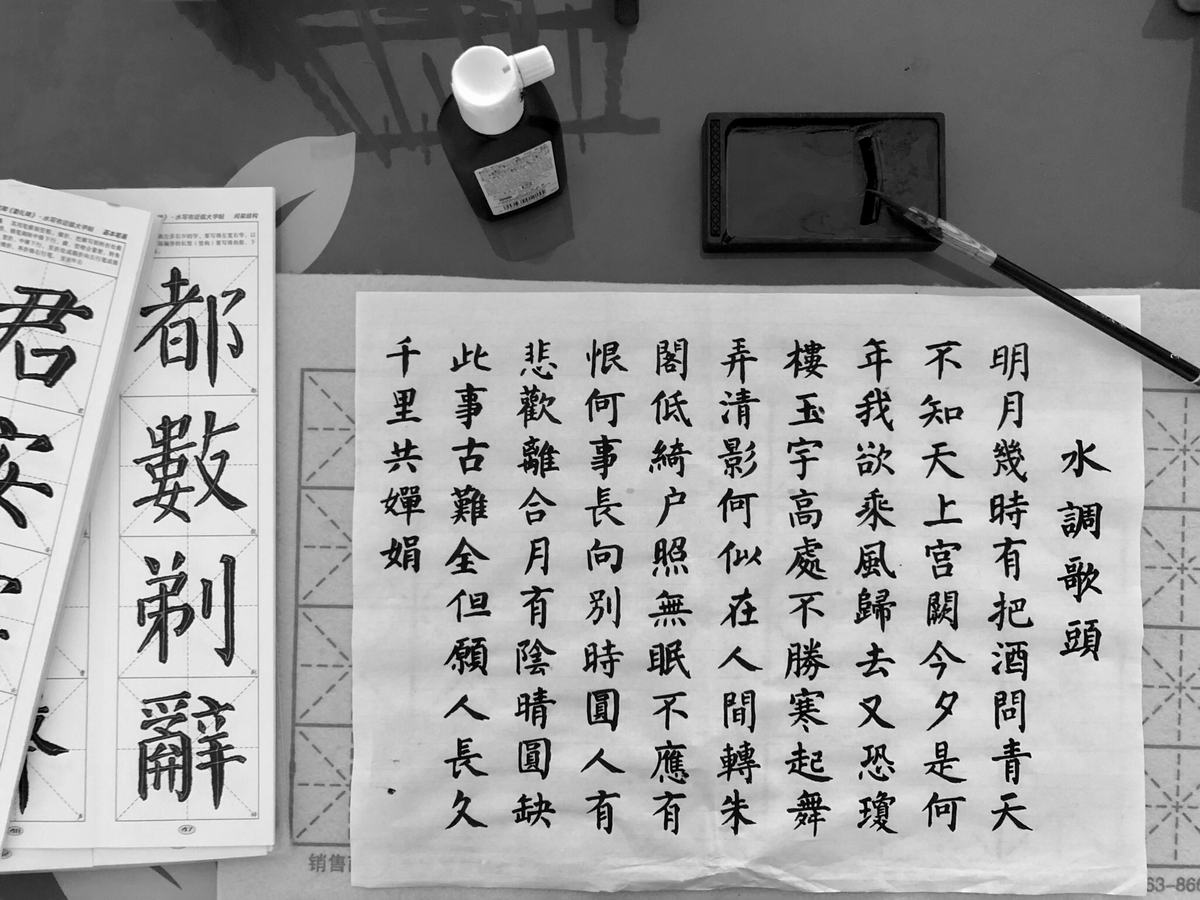
When you can skip writing
The case against writing is not a silly one. Most Chinese is typed now: in mainland China people type in pinyin and pick the character from a list, and many say they forget how to write characters they read every day, which even has a name, character amnesia. If you only want to speak, for travel or to talk with family, you can learn with pinyin alone and leave characters out. And in your first weeks, while you know a few dozen characters, seeing them is enough to recognise them, because each one looks different from the rest.
Both arguments get weaker once you want to read. The native speakers who forget how to write learned to read by writing thousands of characters at school, and recognising a character outlasts being able to write it. That is an argument for writing while you learn, not for skipping it.
Where pinyin runs out
In Chinese, each character is read as one syllable. There are few syllables and a great many characters. The 2,000 words of HSK 1 to 4, the first four levels of the new HSK, use 1,096 different characters. Count each character once, by its main reading, and they share only 668 different syllables, tones included. Leave the tones out and it is 336: about three characters for every syllable.
The biggest group is shì. Fourteen of the 1,096 have it as their main reading: 是 (to be), 事 (matter), 市 (city), 试 (to try), 室 (room), 视 (to look at), 适 (to suit), 世 (world), 示 (to show), 式 (style), 士 (scholar), 释 (to explain), 氏 (family name) and 柿 (persimmon).
When you listen, context and longer words sort most of these out. But a character you only know by its sound is a character you cannot read.
Where learning by sight gets harder
The other shortcut is to learn characters by seeing them often, without writing them. It works while each character you know looks unlike the others, and gets harder as you learn more, because many characters share most of their shape. Take these four:
| Character | Meaning | Left part |
|---|---|---|
| 请 qǐng | please; to ask | 讠 speech |
| 情 qíng | feeling | 忄 heart |
| 晴 qíng | sunny | 日 sun |
| 清 qīng | clear | 氵 water |
All four have 青 on the right and differ only on the left. Seen often enough, you know that one of them means sunny, but not always which one. Writing one from memory makes you decide which left part it takes, and the left part is the clue to the meaning: the sun for sunny, the heart for a feeling, speech for asking.
Research on adult learners points the same way. In a small 2011 study in the Journal of Educational Psychology, Guan and colleagues taught learners new characters on a computer. Those who wrote each character from memory with a digital pen recognised the characters better, and linked them to their meanings better, than those who saw the same characters and pictured them in their minds. Typing the pinyin helped with the sounds, but not with the shapes or the meanings. Writing teaches the character and pinyin its sound, so learn both.
For the pairs learners actually confuse in their first words, see the Chinese characters beginners mix up most.
Writing teaches you the parts
Most characters are not drawn from scratch. They are built from a few hundred components, smaller parts that come back again and again. The commonest kind of character combines two of them: one hints at the meaning, the other at the sound. Of the 1,096 characters of HSK 1 to 4, at least half (549) are built this way.
The four characters above are one family: 青 qīng is their sound part. So it is in 睛 jīng (eye, as in 眼睛) and 精 jīng (as in 精彩, wonderful), while 猜 cāi (to guess) kept the part and lost the sound. 马 mǎ, horse, works the same way: 妈 mā (mum) adds 女, woman, for the meaning; 吗 ma (the question word) adds 口, mouth; and 码 mǎ (as in 号码, number) adds 石, stone.
The sound part is a clue, not a rule: pronunciation has changed over the centuries. Of the 526 of these characters whose sound part we could compare, it gives the right syllable about 4 times in 10, and the right tone as well about 1 time in 5. Still, the first time you meet 晴, you already have a good guess at its sound and a hint of its meaning. The meaning parts come back just as often: 氵, water, is in 36 of the 1,096 (河 river, 海 sea, 洗 to wash, 汤 soup), and 讠, speech, in 33 (说 to speak, 话 speech, 语 language, 请 please).
Writing is where you learn the parts, because you have to put each one in.
And the characters teach you words
The same happens one level up. Most Chinese words are two characters or more, and the characters come back from word to word: the 2,000 words of HSK 1 to 4 are written with 1,096 characters.
So many new words are made of characters you already know. Of the new words of two characters or more, about a third use only characters from the levels before: 41 of 116 at HSK 2, 120 of 365 at HSK 3 and 284 of 790 at HSK 4. Take 电, electricity, which comes up at HSK 1 in 电话, 电脑, 电视 and 电影:
| Word | Literally | Meaning |
|---|---|---|
| 电话 diànhuà | electric speech | telephone |
| 电脑 diànnǎo | electric brain | computer |
| 电视 diànshì | electric seeing | television |
| 电影 diànyǐng | electric shadow | film |
| 电梯 diàntī | electric ladder | lift (HSK 3) |
By the time 电梯 comes up at HSK 3, it is one new character, not two, and its meaning nearly gives itself away. Each character you learn well pays off in every word that reuses it.
How much writing is enough
- Write from memory. Copying a character ten times trains your hand; recalling it trains your memory, and recall is what makes it stick.
- Write whole words. 电脑, not 电 and 脑 apart: words are what you will read.
- Learn the stroke order as a habit. Each character has a standard order for its strokes, and a few rules cover most of them: top before bottom, left before right, and across before down, as in 十. Following it keeps characters well proportioned and quick to write, but a different order does not make a character wrong.
- Paper or phone, either works. What matters is writing from memory: the learners in that study wrote with a digital pen, not on paper. A phone can also check what you wrote and show you the strokes when you get stuck.
- Type pinyin too. Writing teaches the shapes and meanings, pinyin the sounds.
Learning to write in Hanzio
Hanzio’s writing review asks you to write each word from memory, one character at a time, and reads your handwriting to check it. A stroke-order indicator gives you feedback as you go without failing your answer, and you can hide it. When a character comes out wrong, Hanzio shows you what it read instead, and you can replay the stroke order and trace it.
On any word’s page, tap a character to trace it stroke by stroke. Characters built from parts break down into them, layer by layer, with memory hooks; each part lists the characters it appears in, so 青 leads you to 请, 情, 晴 and 清, and each character lists the words that use it. And if you cannot type a character, draw it in the dictionary search, or take a photo of it with the camera scan to look it up.
Writing is on from the start. If you decide to skip it, you can switch it off for every word or for a single word, or leave it out of one review or practice session.
How we counted
Words, levels and pinyin come from the 2025 HSK exam syllabus, levels 1 to 4: 2,000 words. A character’s reading is the one it has in those words: its own where it is a word by itself, otherwise the one most of its words use, a toned reading before the neutral tone (20 characters only ever have the neutral tone in those words, and take the dictionary’s toned reading of the same syllable, as 睛 jīng does in 眼睛). Each character is counted once, by that reading, so the syllable counts leave out its other readings. A word listed at two levels counts at the lower one, as in the HSK decks. Meaning and sound parts come from open character-etymology data, which classifies 981 of the 1,096 characters; the other 115 are counted as not built from a meaning and a sound part, so “at least half” is a floor. A sound part gives the right syllable when its own reading matches the character’s.
Frequently asked questions
Can you learn Chinese without learning to write?
You can learn to speak without characters, and in your first weeks you can recognise characters without writing them. Reading gets harder without it: the more characters you know, the more of them look alike (请, 情, 晴 and 清 differ only on the left) and sound alike (14 of the 1,096 characters of HSK 1 to 4 are read shì). Writing them from memory is the most reliable way to keep them apart.
Is learning pinyin enough?
For speaking, at the start. Pinyin shows how a word sounds, but Chinese is written in characters, and the 1,096 characters of HSK 1 to 4 share only 336 syllables between their main readings if you leave out the tones. Even typing in pinyin means picking the right character from a list.
Do Chinese people still write by hand?
Less than they used to. Most writing is typed now, and many people say they forget how to write characters they read every day, which is called character amnesia. But they learned to read by writing at school, where handwriting is still taught.
Do I need to learn stroke order?
Learn it as a habit. The standard order keeps characters well proportioned and quick to write, and a few rules cover most characters, such as top before bottom and left before right. A different order does not make a character wrong.
Should I practise on paper or on my phone?
Either works. What matters is writing from memory rather than copying; in the 2011 study, learners wrote with a digital pen on a computer. A phone can also check what you wrote and show you the strokes when you get stuck.
Should I learn to write simplified or traditional characters?
Learn one first, to read and to write. Simplified has fewer strokes and is the script of mainland China and the HSK; traditional is written in Taiwan, Hong Kong and Macau. Our post on simplified vs traditional Chinese compares them.
Start writing your first characters
Hanzio reviews every word by meaning, pinyin, writing and listening, breaks characters into their parts, and has an HSK 1 course. The dictionary is free.