Simplified vs traditional Chinese: which should you learn?
Simplified and traditional Chinese are two ways of writing the same language: standard Chinese, the written form of Mandarin. Simplified characters (学) are used in mainland China, Singapore and Malaysia; traditional characters (學) in Taiwan, Hong Kong and Macau. Simplified is by far the more widely used: about 1.4 billion people use it (98%), against about 31 million for traditional (2%). If you have no reason to choose, learn simplified: it is what the HSK exam and most courses use. Learn traditional if you are heading to Taiwan or Hong Kong, or your family writes it.
Hanzio teaches both scripts. Pick simplified (学) or traditional (學) when you start, and switch whenever you like. Each word’s page also shows how the other script writes it, so you always know both.
Disclosure: we make Hanzio.
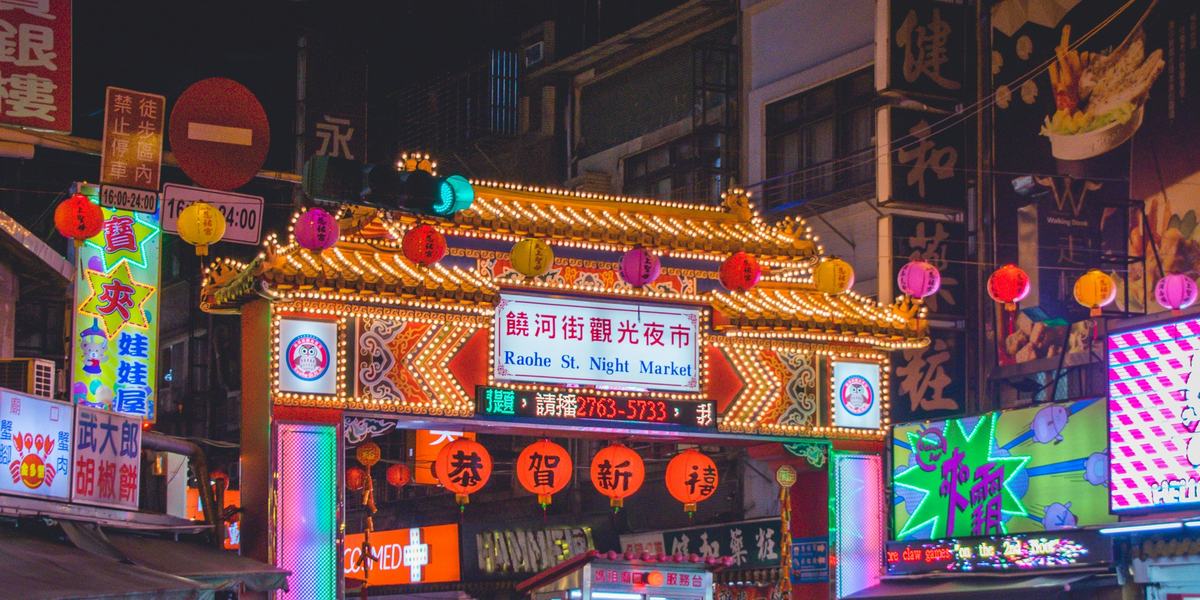
What is the difference?
Both scripts write the same standard Chinese. A sentence in simplified and the same sentence in traditional have the same words and the same grammar; only some of the characters look different, and many look exactly the same:
| Meaning | Simplified | Traditional |
|---|---|---|
| to study xué | 学 | 學 |
| Chinese characters Hànzì | 汉字 | 漢字 |
| to speak shuō | 说 | 說 |
| book shū | 书 | 書 |
| love ài | 爱 | 愛 |
| dragon lóng | 龙 | 龍 |
| person (the same) rén | 人 | 人 |
| Chinese (the same) Zhōngwén | 中文 | 中文 |
Traditional characters are the older forms: Chinese was written in them until the 1950s, and Taiwan, Hong Kong and Macau still write them. Mainland China simplified them to make reading and writing easier to learn, first in the 1956 simplification scheme and then in the General List of Simplified Characters of 1964. Many of the new forms were not new at all: people had been writing them by hand as shortcuts for centuries. A second round of simplification, published in 1977, was withdrawn in 1986.
How much is actually different?
Less than it looks. We took the 100 most common characters and wrote each one in traditional, as Taiwan writes it, in every word of HSK 1 to 4 that contains it:
- 71 are the same in both scripts: 的, 我, 是, 不, 人, 大 and 65 more.
- 27 always change: 这 is 這, 个 is 個, 们 is 們.
- 2 change in some words only: 里 is 裡 in 哪裡 (where) but stays 里 in 公里 (kilometre), and 面 is 麵 in 麵包 (bread) but stays 面 in 見面 (to meet).
Those 29 are common enough to make up 9.6% of all the characters in everyday text, nearly one in ten. The more words you count, the larger the share that changes, and words change more often than single characters:
| Measured | Written differently |
|---|---|
| The 100 most common characters | 29% |
| The 3,088 characters used in HSK words | 38% |
| The 300 HSK 1 words | 46% |
| All HSK words, levels 1 to 9 (about 10,900) | 58% |
| Hanzio’s dictionary, words of two or more characters | 62% |
A word changes when any one of its characters does, which is why words change more often.
Traditional also takes more strokes. Across the 100 most common characters, simplified averages 6.5 strokes and traditional 8.0, and across the characters used in HSK words, 9.6 against 11.7.
How the characters were simplified
Many of the changes follow a handful of patterns, so once you know one script, learning the other is much quicker. The most useful: a component written more simply. Some, like 言, 金, 食 and 糸, usually change only on the left side of a character, so 信 (to believe) keeps its 言; others, like 門 and 馬, change in almost every character that has them.
| Component | Examples |
|---|---|
| 言 → 讠 | 說 → 说 to speak, 請 → 请 please |
| 門 → 门 | 問 → 问 to ask, 們 → 们 (plural) |
| 馬 → 马 | 媽 → 妈 mum, 嗎 → 吗 (question) |
| 金 → 钅 | 錢 → 钱 money, 銀 → 银 silver |
| 食 → 饣 | 飯 → 饭 meal, 餓 → 饿 hungry |
| 糸 → 纟 | 紅 → 红 red, 給 → 给 to give |
Other characters kept one part and dropped the rest (習 became 习, 飛 became 飞), went back to an older form (雲, cloud, became 云, which is how it was written before the 雨 “rain” on top was added), or swapped the part that gives the sound for a simpler one that sounds alike (遠, far, became 远: 袁 yuán became 元 yuán).
And some merged, so that one simplified character now stands for two traditional ones:
- 发 is 發 in 出發 (to set off) and 髮 in 頭髮 (hair).
- 面 is 面 in 見面 (to meet) and 麵 in 麵條 (noodles).
- 后 is 後 in 以後 (after) and 后 in 皇后 (empress).
- 干 is 乾 in 乾淨 (clean) and 幹 in 幹什麼 (doing what?).
So reading traditional when you know simplified is mostly a matter of learning the new shapes, but writing it needs the word: 发 on its own does not tell you whether it is hair.
Where each one is used
| Where | Script | People |
|---|---|---|
| Mainland China | Simplified | 1,405 million |
| Singapore | Simplified, the same forms as the mainland since 1976 | 3.1 million Chinese residents |
| Malaysia | Simplified in Chinese schools | 6.8 million Chinese Malaysians |
| Taiwan | Traditional | 23.2 million |
| Hong Kong | Traditional | 7.5 million |
| Macau | Traditional | 0.7 million |
Across these places, about 1.4 billion people use simplified and about 31 million use traditional: roughly 98 in every 100 against 2. Simplified is also the script of the United Nations’ Chinese documents and of the HSK, the mainland’s exam; Taiwan’s exam, the TOCFL, is offered in both.
The table leaves out Chinese communities in other countries, where traditional is often still common. Many of them predate simplification, or grew from emigration from Hong Kong, Taiwan and southern China: Manhattan’s Chinatown, for example, is signed almost entirely in traditional. Newer arrivals from the mainland write simplified, and the two scripts often appear side by side.
Taiwan and Hong Kong both write traditional, but their standards differ in a few characters: Hong Kong writes 裏 and 麪 where Taiwan writes 裡 and 麵. The traditional forms on this page are Taiwan’s.
Which one should you learn?
Learners choose simplified too: of the thousands of Hanzio learners who have done at least one review, about 4 in 100 study traditional (October 2026), around twice its 2 in 100 in the table above. Hanzio marks simplified as recommended when you sign up, which nudges that.
Learn simplified if
- you are going to mainland China or Singapore, or doing business there;
- you want to take the HSK;
- you want the widest choice of courses, textbooks and graded readers;
- you have no particular reason to choose.
Learn traditional if
- you are going to live or study in Taiwan, Hong Kong or Macau;
- your family, or the Chinese community where you live, writes traditional;
- you care about calligraphy or books printed before the 1950s.
You are not choosing for life: once you can read one script, the other comes far faster than the first did, because 71 of the 100 most common characters are the same and many of the changes follow the patterns above. If you need both, a common approach is to learn one to read and write, and the other to read.
What the script does not decide
The language. Simplified and traditional are ways of writing, not languages. Mandarin is written in both. In Hong Kong and Macau most people speak Cantonese, but formal writing there is the same standard Chinese, in traditional characters, read aloud in Cantonese. Everyday Cantonese is written down too, with a few characters of its own.
The vocabulary. Taiwan and the mainland use some different words for the same thing, and changing the script does not change the word. A taxi is 出租车 on the mainland, 出租車 in traditional characters, but in Taiwan people say 計程車. Some words are read differently too: 垃圾 (rubbish) is lājī on the mainland and lèsè in Taiwan.
How pronunciation is written. Pinyin is the mainland’s system, and the one most courses teach, in either script. Taiwan’s schools teach Zhuyin instead (also called bopomofo, after its first four symbols, ㄅㄆㄇㄈ).
Learning either one in Hanzio
Hanzio asks at the start which script you want to learn, 学 or 學, with simplified marked as recommended, and you can switch in Settings. Each script keeps its own progress, so switching back loses nothing.
A word’s page shows its form in the other script whenever the two differ, so you meet both as you go, and the dictionary finds a word in whichever script you type it. The writing review checks the script you chose: if you are learning 别, writing 別 is not accepted. The HSK 1 grammar course and its stories come in both scripts, and traditional learners also get the TOCFL word lists, from Novice 1 to Level 5, as decks.
The 29 common characters that change
Here are the 29 of the 100 most common characters that change, from most to least common. Where one has two traditional forms, the second is shown with a word that uses it:
| # | Simplified | Traditional | Meaning |
|---|---|---|---|
| 11 | 这 zhè | 這 | this |
| 12 | 个 gè | 個 | (the most common measure word); individual |
| 13 | 们 men | 們 | (plural ending for people: 我们 "we", 他们 "they") |
| 15 | 来 lái | 來 | to come |
| 20 | 为 wèi / wéi | 為 | for, because of (wèi); to be, to act as (wéi) |
| 22 | 会 huì | 會 | can (a learned skill); will, likely to; meeting |
| 26 | 国 guó | 國 | country, nation |
| 27 | 么 me | 麼 | (word ending: 什么 "what", 怎么 "how", 这么 "so") |
| 29 | 时 shí | 時 | time; hour; (as in 时候 "when") |
| 34 | 说 shuō | 說 | to say, to speak |
| 36 | 对 duì | 對 | right, correct; to, towards; pair |
| 39 | 发 fā / fà | 發 髮 in 頭髮 | to send; to issue; (as in 发生 "to happen", 发展 "to develop"); hair (fà, as in 理发 "to get a haircut") |
| 41 | 过 guò / guo | 過 | to cross, to pass; to spend (time); (particle: have done before) |
| 48 | 没 méi | 沒 | not (with 有, and for the past: 没有 "don't have, didn't") |
| 51 | 后 hòu | 後 | after, later; behind, back |
| 55 | 还 hái / huán | 還 | still, yet; also, even more (hái); to give back (huán) |
| 58 | 开 kāi | 開 | to open; to drive; to start; to turn on |
| 61 | 现 xiàn | 現 | to appear; (as in 现在 "now") |
| 63 | 里 lǐ | 裡 里 in 公里 | inside, in |
| 66 | 经 jīng | 經 | to pass through; (as in 已经 "already", 经济 "economy") |
| 67 | 学 xué | 學 | to study, to learn |
| 68 | 业 yè | 業 | line of work, business; (as in 作业 "homework", 毕业 "to graduate") |
| 69 | 着 zhe / zháo | 著 | (particle: something ongoing: 坐着 "sitting"); to touch, to reach (zháo, as in 睡着 "to fall asleep") |
| 72 | 动 dòng | 動 | to move |
| 76 | 于 yú | 於 | (formal) at, in, to, from; (as in 关于 "about", 对于 "regarding") |
| 81 | 进 jìn | 進 | to enter, to come in; to move forward |
| 82 | 面 miàn | 面 麵 in 麵包 | face; side, surface; (as in 面条 "noodles") |
| 95 | 实 shí | 實 | real, true; (as in 其实 "actually", 实在 "really") |
| 97 | 样 yàng | 樣 | shape, kind; (as in 一样 "the same", 怎么样 "how about") |
How we counted
The 100 most common characters are the ones on our list, counted from 33 billion characters of simplified Chinese, so the 9.6% is a share of simplified text. A character’s traditional form comes from the HSK 1 to 4 words that contain it, as Taiwan writes them, and it counts as the same only if it is the same in all of them; where Taiwan accepts two spellings and one keeps the character (了解 and 瞭解), it counts as the same. “All HSK words” means every level of the 2025 syllabus, and the dictionary figure covers its words of two or more characters.
Population figures are each place’s official estimate: end of 2025 for mainland China, September 2026 for Taiwan, mid-2026 for the rest. They count everyone in those places, young children included, or in Singapore and Malaysia the Chinese community (in Malaysia, citizens only). The learner figure counts Hanzio learners with at least one review answer, by the script their app is set to, as of October 2026.
Frequently asked questions
How many people use traditional Chinese?
About 31 million: 23.2 million in Taiwan, 7.5 million in Hong Kong and 0.7 million in Macau. About 1.4 billion use simplified, in mainland China and the Chinese communities of Singapore and Malaysia, so across these places, about 98 in every 100 use simplified. Many older Chinese communities abroad still write traditional.
Is traditional Chinese harder to learn than simplified?
Harder to write by hand, because it has more strokes: an average HSK word takes 20 strokes to write in traditional against 16 in simplified. For reading, the gap is smaller than the strokes suggest, since you recognise a character by its parts, and most learners type rather than write by hand.
Can people in China read traditional characters?
Much of it, especially in context: 71 of the 100 most common characters are the same in both scripts, and many of the others follow regular patterns. Reading the other script fluently takes some practice, and writing it takes more. The same is true the other way round for readers in Taiwan and Hong Kong.
Is Cantonese written in traditional characters?
Usually, yes: Hong Kong and Macau, where Cantonese is spoken, use traditional characters. Their formal writing is standard Chinese, the same written language as in Taiwan and mainland China, read aloud in Cantonese; everyday Cantonese is written down too, with a few characters of its own. The script does not decide the language: simplified and traditional describe how characters are written, not which language they write.
Which script does the HSK use?
Simplified. The HSK, the mainland's proficiency exam, is set in simplified characters. Taiwan's exam, the TOCFL, is offered in both scripts.
Should I learn both?
Learn one first, to read and to write. Once it feels solid, learning to read the other is quick, because so many characters are the same or change in predictable ways. In Hanzio, a word's page shows its form in the other script whenever the two differ, so you meet it as you go.
Start with either script
Hanzio teaches simplified and traditional: a dictionary, reviews of every word and an HSK 1 course, in the script you choose. The dictionary is free.