The best apps to learn Chinese in 2026
For most learners, the best app to learn Chinese in 2026 is Hanzio. It takes you from your first word through HSK 1 grammar and graded stories, makes the vocabulary stick with spaced repetition, quizzes you on pinyin and tones, and has a full dictionary built in. Its biggest gap is speaking: it does not listen to you. For that, add HelloChinese.
Our four picks:
 Hanzio, best overall
 Pleco, best dictionary
 HelloChinese, best for speaking practice
 Du Chinese, best for reading past HSK 1
Disclosure: Hanzio is our app, so we are not impartial. Every app here is judged on the same terms, we say plainly where competitors do it better, and Hanzio's own weaknesses are listed with the rest. If you finish this and install one of the others, that is a good outcome.
Best overall: Hanzio
Hanzio
A grammar course with graded stories, spaced-repetition vocabulary with pinyin, tone and handwriting practice, and a dictionary of 150,000+ entries with a frequency figure on every word and a camera scan for the Chinese around you. One app, built on one set of words.
Use this if: you want one app to take you from your first word through HSK 1, and to keep every word you meet along the way. Do not use this if: speaking out loud is your priority. Hanzio does not listen to you speak, so pair it with HelloChinese or a tutor.
Why it's great: covering all four jobs with the rest of this list takes two or three apps, each with its own progress. Hanzio does all four on one shared set of words.
| The job | The usual app | In Hanzio |
|---|---|---|
| A course with grammar | HelloChinese | Lessons (HSK 1) |
| Reading at your level | Du Chinese | Stories (HSK 1) |
| Remembering words | Anki or Skritter | Vocabulary |
| Looking words up | Pleco | Built-in dictionary |
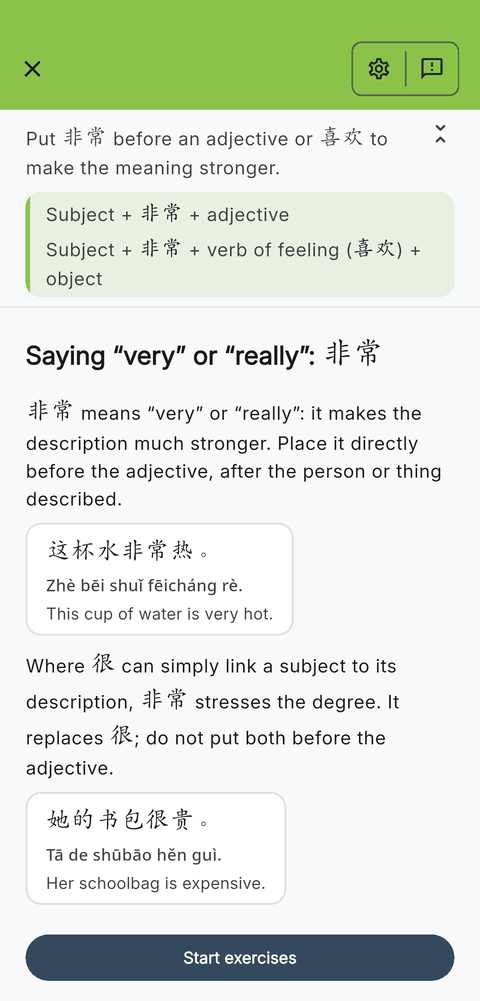
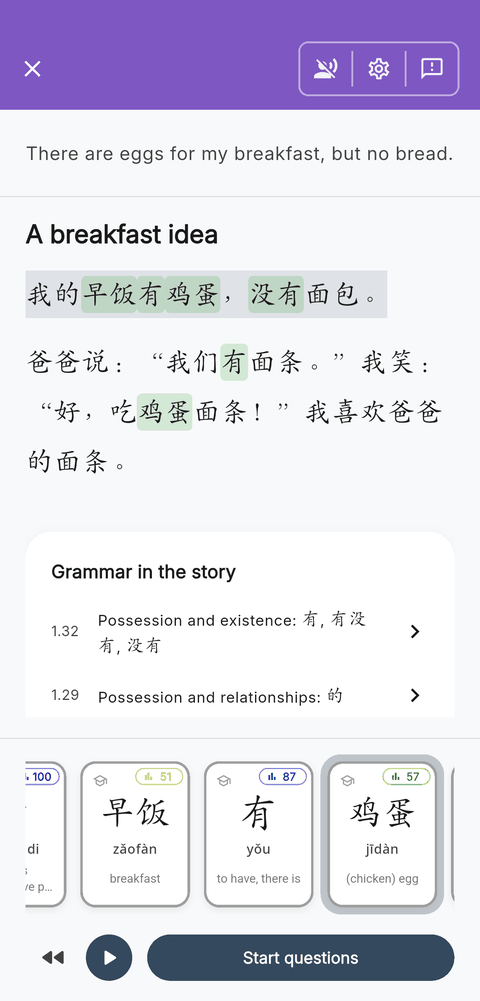
A course that builds on itself. The HSK 1 course has 81 grammar lessons, covering all 48 points the official HSK 3.0 standard sets for the level, with 120 short stories between them. Each lesson explains one grammar point, then has you complete sentences, mostly by building the missing part from tiles, where the wrong tiles are the mistakes learners actually make at that point. The story that follows puts the grammar to use and adds about four new words; every other word in it is one you have already met. Stories are read aloud with the current sentence highlighted, pinyin appears when you want it, and a tap on a word brings up its card.
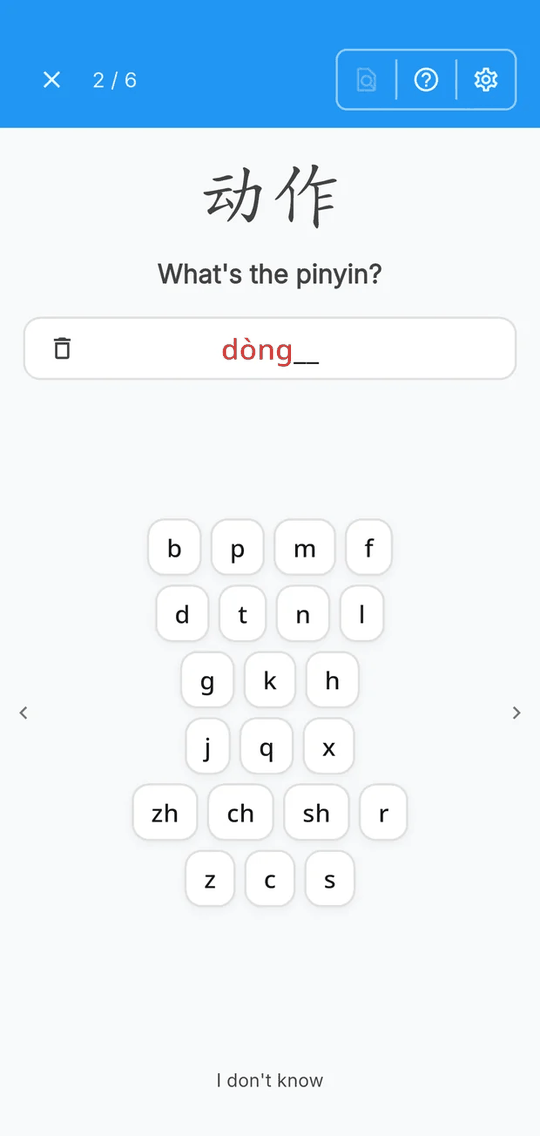
Pinyin and tones, tested properly. Each word also comes back as a pinyin question: you type it on a keyboard built from real Chinese syllables and then draw the tone. A wrong tone is a wrong answer, because in Chinese it is a different word: 妈 mā is "mother", 马 mǎ is "horse". A tone you miss comes back as a quick draw-the-tone question when you retry. Audio mode plays a word and asks which one you heard, tones are colour-coded in every study session and on each word's page, and tone changes, such as 你好 being said ní hǎo, get a lesson of their own.
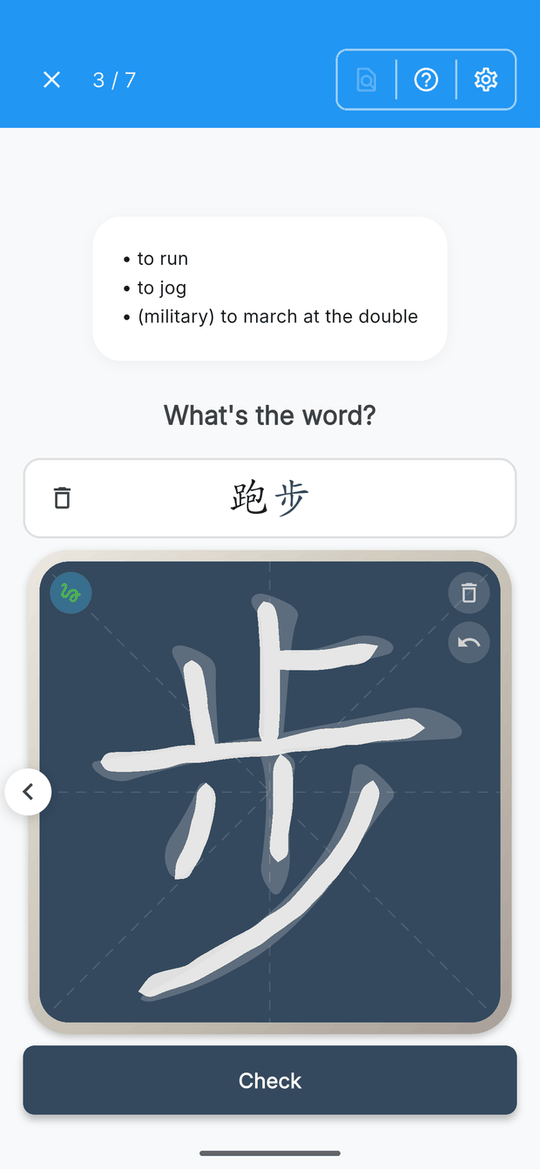
Vocabulary that sticks. Underneath is spaced repetition, so a word comes back just before you would forget it, and active recall, so you produce the answer instead of picking it from a list: its meaning, its pinyin and, from memory, its handwriting, while audio mode checks that you know it by ear. Writing is judged on the character you drew, not stroke by stroke, so a hurried hand is fine as long as the result is recognisable.
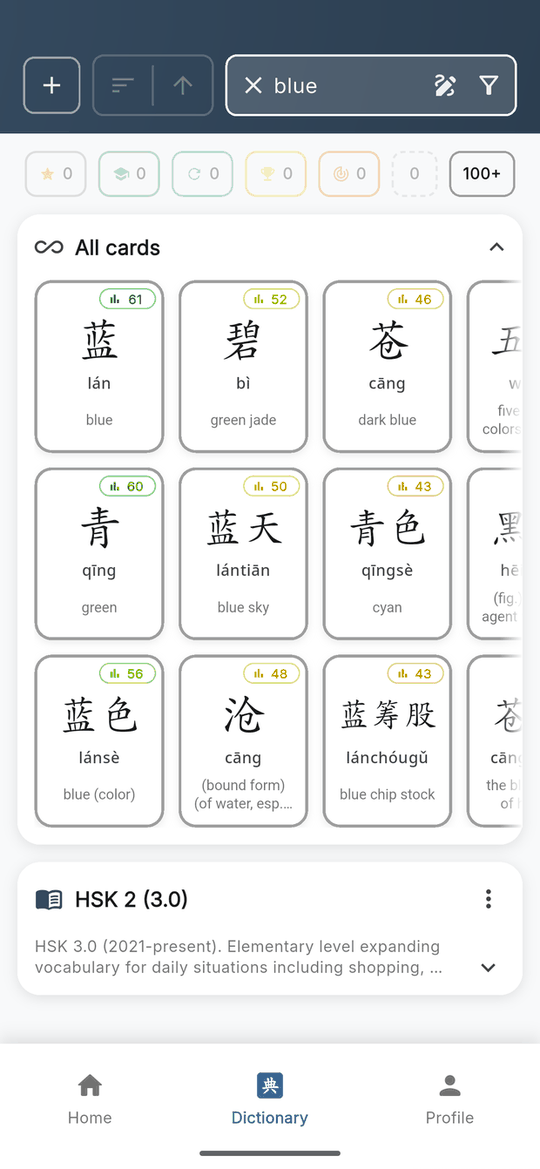
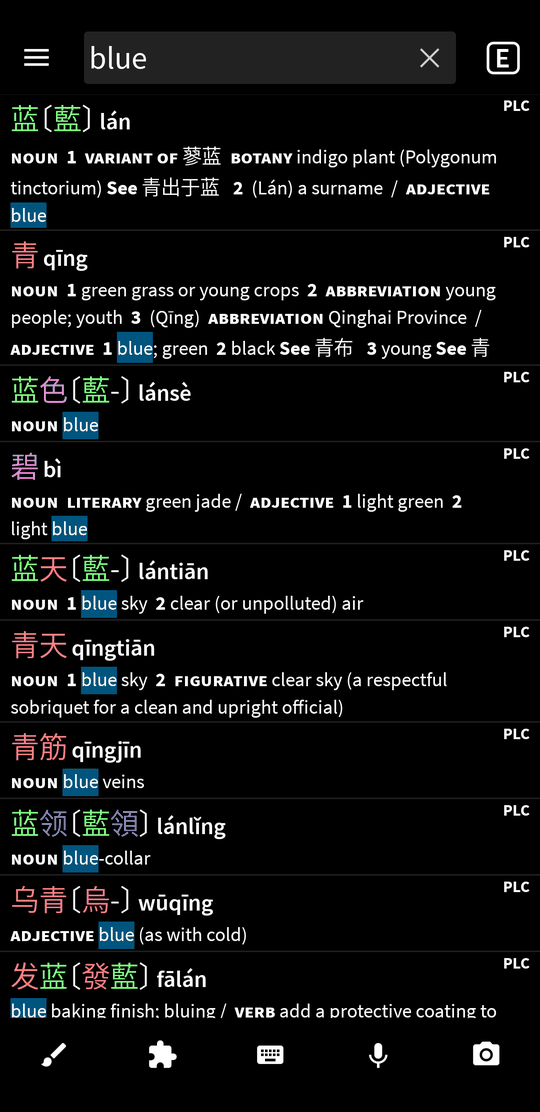
A dictionary that tells you what to learn. Every one of its 150,000+ entries, and every component and example, carries a frequency figure. That matters because Chinese is full of pairs like 好 hǎo and 良好 liánghǎo: both mean "good", but you hear the first a hundred times a day and see the second on a school report. Characters also come apart, 菜 into 艹 (grass) and 采 (to pick), each piece with its own mnemonic and frequency. (How many characters do you need in the end? We counted 33 billion to find out.)
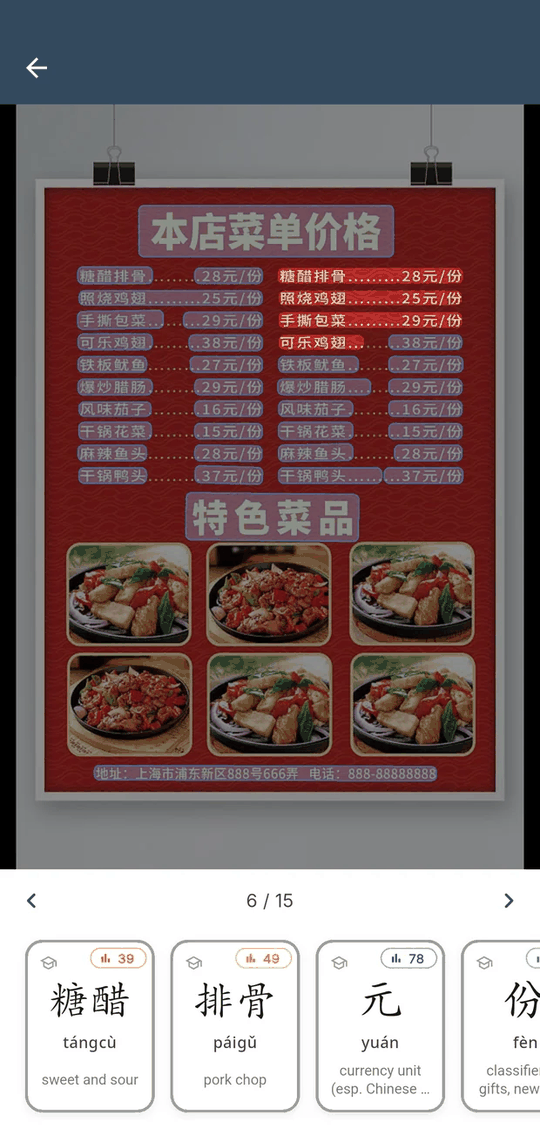
Look up what you cannot type. Draw a character to search for it, or use the camera text scan (OCR): snap a menu, a sign or a page, or pick a photo, and Hanzio finds the Chinese; a tap on any sentence shows its words with pinyin, meaning and frequency, ready to study. The scan is free and runs on your phone, even offline. Pleco can read a sign live through the camera, but its OCR is a paid add-on.
Flaws but not dealbreakers
There is no speaking practice. This is the real gap. Audio mode tests whether you recognise a word by ear and the stories are read aloud, but nothing listens to you speak and grades your pronunciation. If you want your third tone corrected out loud, add HelloChinese or a tutor.
The course covers HSK 1 so far. Vocabulary review and the dictionary work at every level, but the lessons and stories currently stop at HSK 1, with the next levels in progress. Past that point you will want a textbook or Du Chinese alongside.
The course is part of the subscription. The dictionary is free and unlimited, and there is a free daily study allowance, but more study time, the lessons and the stories need a subscription.
Key features
- Course: 81 grammar lessons and 120 graded stories for HSK 1, in simplified or traditional, with HSK (Mainland) vocabulary
- Dictionary: 150,000+ entries, simplified and traditional, searchable by drawing a character or by camera text scan (OCR), works offline
- Study modes: meaning, pinyin (tones drawn), writing and audio, each scheduled separately
- Standout: frequency data on every entry, component and example
- Languages: interface, dictionary and course in English, Spanish, Korean, Arabic, Thai, French, Indonesian, Vietnamese, Russian, Portuguese and German
- Pricing: free dictionary and daily study allowance; subscription for the course and unlimited study
- Works on: iOS, Android
Best dictionary: Pleco
Pleco
The most thorough Chinese dictionary on a phone, free, offline, and unchallenged for over a decade.
Use this if: you want the deepest English-Chinese reference there is, or a second opinion on any word.
Why it's great: Pleco has been the default Chinese dictionary for fifteen years. Look a word up by pinyin, by drawing it or by pointing your camera at a sign, all offline. The core app is free and genuinely complete; extras such as camera recognition and flashcards are one-time add-ons, with no subscription.
Flaws but not dealbreakers
It is not a course. Pleco never tells you what to learn next. It expects you to arrive knowing what you are looking for.
You see the order, never the number. Results are sorted by frequency, but no figure tells you whether the second result is nearly as common as the first or a hundred times rarer, which is exactly what a beginner needs to know.
The interface shows its age. Dense, with the good features buried behind tabs and long-press menus.
Best for speaking practice: HelloChinese
HelloChinese
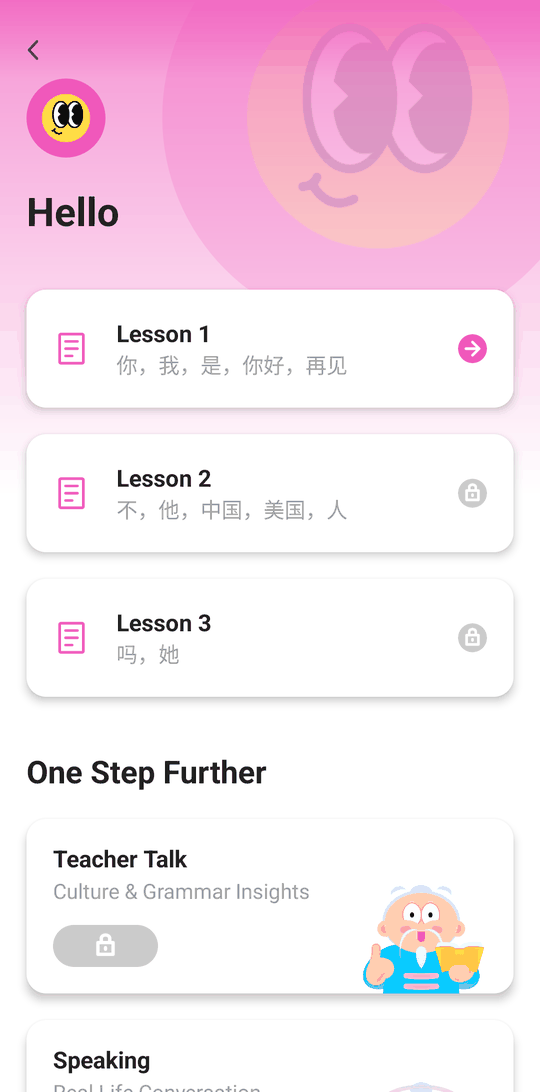
A beginner course with speech recognition that checks what you say out loud, which Hanzio does not do.
Use this if: you want to practise speaking from the first day.
Why it's great: HelloChinese does only Chinese, and that focus shows. It takes pinyin and tones seriously, listens to you speak and tells you when you got it wrong, and runs from absolute zero to roughly lower-intermediate, with grammar woven into the lessons. It is gamified the way Duolingo is, but built by people who clearly understand what makes Chinese hard.
Flaws but not dealbreakers
The free tier runs out early. You hit the paywall well before the end of the beginner material.
Vocabulary review is adequate, not excellent. Its spaced repetition supports the lessons rather than carrying thousands of words, and there is no dictionary for the words you meet elsewhere.
You will outgrow it. The course tapers off around lower-intermediate. It is a good on-ramp, not a destination.
Best for reading past HSK 1: Du Chinese
Du Chinese
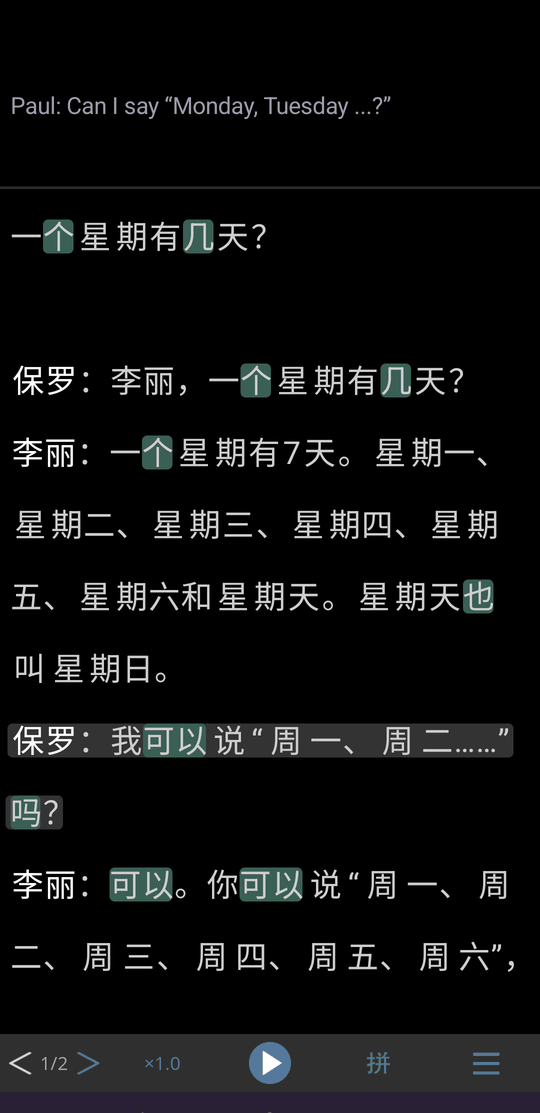
A large library of levelled stories and articles with native audio, from beginner to advanced. The place to read once you are past HSK 1.
Use this if: you have a base of a few hundred words and real Chinese still looks like a wall.
Why it's great: Du Chinese has more than 3,000 stories, articles and courses, graded from Newbie to Master and narrated by native speakers, with tap-for-definition on every word, grammar notes, and pinyin you can switch off as you improve. Words you save become flashcards. Reading at exactly your level is the most underrated resource in language learning.
Flaws but not dealbreakers
Most of the library is paid. A few free stories rotate through; the volume is behind the subscription.
It is reading and listening first. There is no writing and no speaking practice, and its courses are built around reading.
It needs a running start. Below a few hundred words, even the easiest texts become a wall of lookups.
How the seven apps compare
Judged only on what each app does itself. "Some" means the feature exists but is not what the app is for; "HSK 1" means it covers that level so far; "Sort only" means results are ordered by frequency without showing a figure. Hanzio and Du Chinese checked October 2026, the rest July 2026; check the store before paying.
| App | Dictionary | Course | Writing | Speaking | Reading | Frequency | Free |
|---|---|---|---|---|---|---|---|
| Hanzio | Yes | HSK 1 | Yes | No | HSK 1 | Shown | Some |
| Pleco | Yes | No | Some | No | Some | Sort only | Yes |
| HelloChinese | No | Yes | Some | Yes | Some | No | Some |
| Du Chinese | Some | Some | No | No | Yes | No | Some |
| Skritter | No | No | Yes | No | No | No | Trial |
| Anki | No | No | Some | No | No | No | Yes |
| Duolingo | No | Yes | No | Some | No | No | Yes |
Scroll the table sideways to see every column.
The competition

Skritter
Skritter got to stroke-level handwriting practice long before anyone else, and Hanzio's writing mode is built on its idea that you should produce a character, not recognise it. It is more than a writing app: it schedules writing, reading, definition and tones separately.
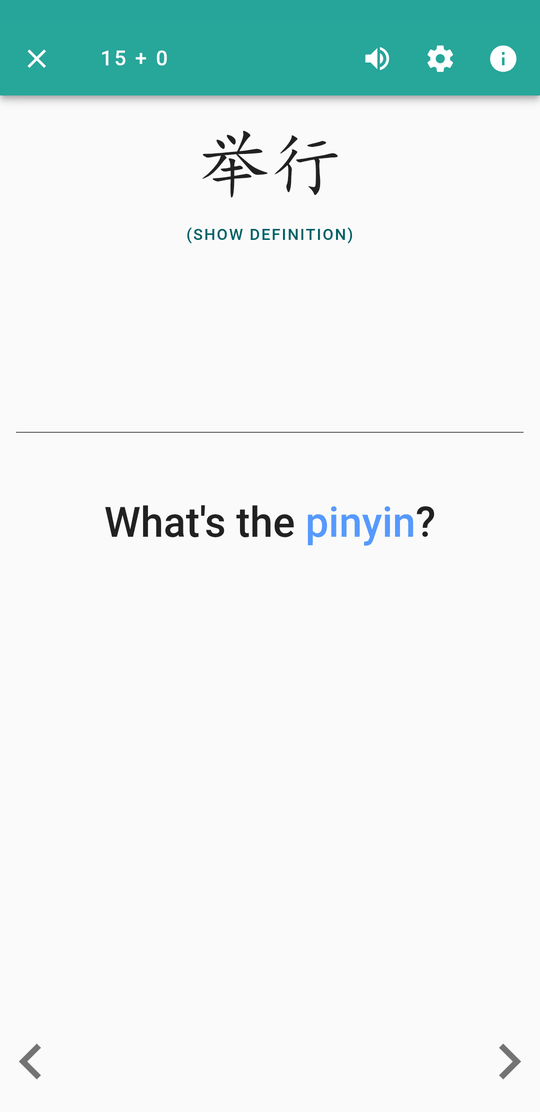
What keeps it out of the picks is that Skritter has no dictionary. It reviews vocabulary but cannot help you find any, and its own documentation walks you through importing your word list out of Pleco. So it usually ends up as a third app on its own subscription, and nothing in it tells you how common a word is. Worth it if you already have a word list you trust.

Anki
Anki is a general-purpose spaced repetition system with excellent scheduling, free everywhere except iOS. It ships with no Chinese content, though, so you either import a shared deck of unknown quality or build your own, and the hours spent on card templates are hours not spent on Chinese. Choose it if you enjoy tinkering.

Duolingo
Duolingo is the most-used language app on earth because it solved the problem that kills most learners, which is quitting in week three. Its Mandarin course is the weak part: light on tones and characters, and easy to pass by pattern-matching. Treat it as the habit layer, not the curriculum.
How to combine them
Most people end up with two apps, so the useful question is which pair.
- Starting out: Hanzio, plus HelloChinese if you want your speaking checked from day one.
- Past HSK 1: Hanzio for vocabulary and characters, Du Chinese for reading volume.
- Spending nothing: Pleco for lookup and Anki for review, with the patience to build your own cards.
The one combination to avoid is two review apps. That is not twice the retention, it is two sets of intervals fighting each other.
Frequently asked questions
What is the best app to learn Chinese?
For most learners, Hanzio. It combines an HSK 1 grammar course and graded stories with spaced-repetition vocabulary, pinyin and tone practice, handwriting and a full dictionary. For speaking practice, add HelloChinese.
What is the best app for a complete beginner?
Hanzio if you want to read and write, not just speak: it starts you on the most useful words, then walks you through HSK 1 grammar and stories in order. HelloChinese if speaking out loud is your priority from day one.
What is the best app to learn Chinese grammar?
Hanzio for HSK 1: 81 lessons covering all 48 grammar points the official HSK 3.0 standard sets for that level, each practised with exercises and then used in a story. HelloChinese teaches grammar inside its lessons up to roughly lower-intermediate. Beyond that, a textbook is still the most complete option.
What is the best app for pinyin and tones?
Hanzio, if you want to be tested on them: its pinyin reviews ask you to type each word's syllables and draw the tone, and a wrong tone counts as a wrong answer. For pronouncing tones out loud, HelloChinese's speech recognition is the better tool.
What is the best app for HSK?
Hanzio. Its course follows the official HSK 3.0 standard for level 1, and its vocabulary decks cover the HSK word lists level by level. No app here is an official HSK course, so check the exam syllabus for your test date, and add a textbook for grammar past level 1.
What is the best free app to learn Chinese?
Pleco plus Anki, at the price of building your own cards. Hanzio's dictionary is free too, with a free daily study allowance, but its course needs a subscription.
Which Chinese app works offline?
Pleco's and Hanzio's dictionaries work with no signal, and so does Hanzio's vocabulary review. Course and reading apps generally need a connection for anything you have not downloaded.
Is Duolingo good for learning Chinese?
It is good at getting you to show up every day. But it is light on tones and characters and will not teach you to write, where HelloChinese and Hanzio take both seriously from the first lesson.
Should I learn simplified or traditional characters?
Simplified for mainland China, Singapore or the HSK exam; traditional for Taiwan, Hong Kong or Macau. Pleco, Hanzio and Skritter handle both, and Hanzio's course comes in both scripts, with HSK (Mainland) vocabulary.
From your first word to your first story
Look words up, learn the grammar, read stories and keep every word with spaced repetition, without switching apps. The dictionary is free. Try it on your next 100 words.