How to study in China: universities, costs, scholarships and visas
China has two universities in the world’s top 15, Peking University and Tsinghua University, in both the QS and the Times Higher Education rankings for 2027. No other country published more research in leading journals in 2025. Tsinghua charges international undergraduates RMB 26,000 to 40,000 a year for most of its programmes taught in Chinese, about US$3,900 to 6,000. That isn’t nothing, but the University of Pennsylvania, just below it in QS, charges over US$65,000. Government scholarships can pay the tuition, a room and a monthly allowance. You need a student visa and, for a degree, some Chinese, even if it is taught in English.
A degree in China means learning some Chinese. Under the Ministry of Education’s standard, even degrees taught in English set a level of Chinese to reach by graduation. Hanzio helps you get there: a deck for every HSK level teaches each word’s meaning, pinyin and tones, sound and writing.
Disclosure: we make Hanzio. Rankings, fees and rules come from the universities and official sources, listed at the end.
Why study in China?
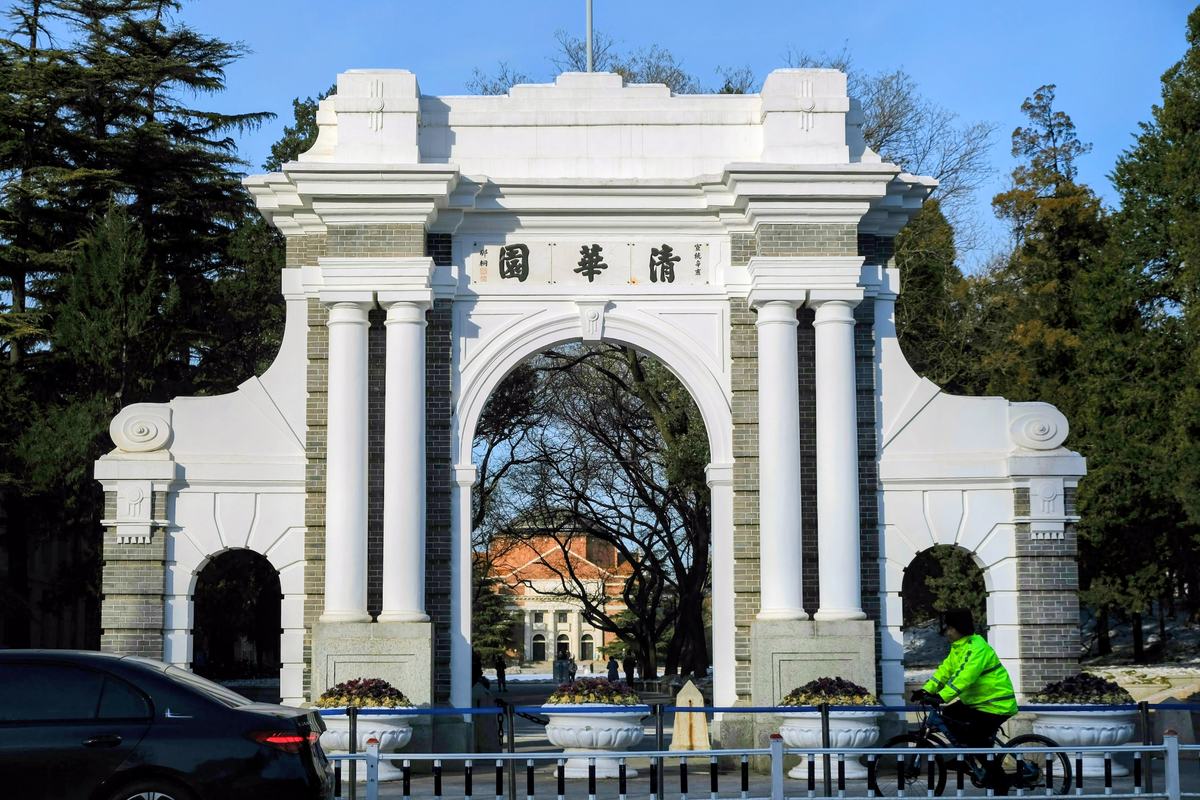
Five reasons stand out: some of the world’s top-ranked universities; fees and living costs far below those of many universities ranked near them; a second skill to take home with your degree, Chinese; a head start for your career; and a culture and a cuisine to discover while you’re there.
Top-ranked universities
Peking University and Tsinghua University are in the world’s top 15 in both of the best-known world rankings, QS and Times Higher Education (THE). Six mainland universities are in the QS top 100:
| University | City | QS 2027 | THE 2027 |
|---|---|---|---|
| Peking University | Beijing | 13 | 13 |
| Tsinghua University | Beijing | 14 | 11 |
| Fudan University | Shanghai | 26 | 38 |
| Shanghai Jiao Tong University | Shanghai | 36 | 39 |
| Zhejiang University | Hangzhou | 47 | =34 |
| Nanjing University | Nanjing | =90 | 59 |
THE’s top 100 also has the University of Science and Technology of China, in Hefei (=51), and Harbin Institute of Technology (96), and its top 200 has 17 mainland universities, up from 13 the year before.
Research tells the same story. The Nature Index, which counts papers in a list of leading journals and conferences, puts China first for 2025, ahead of the United States, and nine of the ten institutions at the top of its table are Chinese, among them universities in Hangzhou, Hefei, Nanjing and Chengdu. By subject, China leads it in chemistry, the physical and biological sciences and the applied sciences; the United States still leads in health sciences.
A ranking says more about a university’s research and reputation than about your classes, so look at the ranking for your subject too, and at the programme’s own page.
What it costs
Each university sets its own fees for international students. For programmes taught in Chinese, Tsinghua and Peking University charge RMB 26,000 to 40,000 a year, depending on the subject; clinical medicine costs more. Here is how that compares with two universities ranked near them in QS:
| University (QS 2027) | Year | Tuition a year | About, in US$ |
|---|---|---|---|
| ETH Zurich (8th) | 2026–27 | CHF 4,380 | 5,300 |
| Peking University (13th) | 2025–26 | RMB 26,000–30,000 | 3,900–4,500 |
| Tsinghua University (14th) | 2027–28 | RMB 26,000–40,000 | 3,900–6,000 |
| University of Pennsylvania (15th) | 2026–27 | US$65,670 | 65,670 |
Programmes taught in English usually cost more (RMB 100,000 a year for Tsinghua’s undergraduate ones), so check your programme’s page. Living costs widen the gap: a double room on Tsinghua’s campus costs RMB 40 a day, under US$2,200 a year, against US$13,644 for a room at Penn, and ETH Zurich tells students to budget CHF 20,000 to 26,000 a year (about US$24,300 to 31,600) for living and study costs.
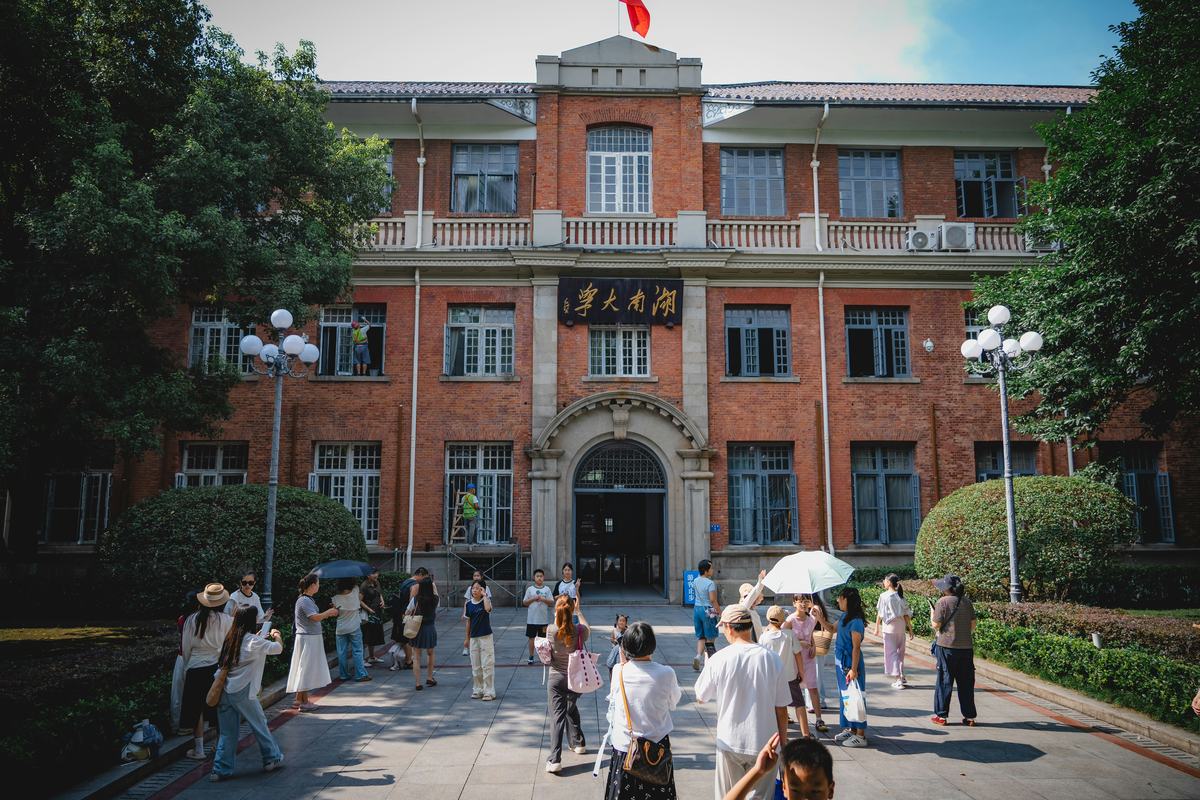
Outside the biggest cities it costs less still: Hunan University, in Changsha, charged international undergraduates RMB 15,000 to 17,000 a year in 2025, and RMB 6,000 a year for a double room.
A second skill: Chinese
Living in China puts the language around you all day: in the canteen, on the metro, in the group chat for your class. You learn from all of it, not only from your lessons, so you finish your degree with a second skill besides it. Every word you bring with you makes the first weeks easier. For everything else Chinese opens up, see why learn Chinese.
A head start for your career
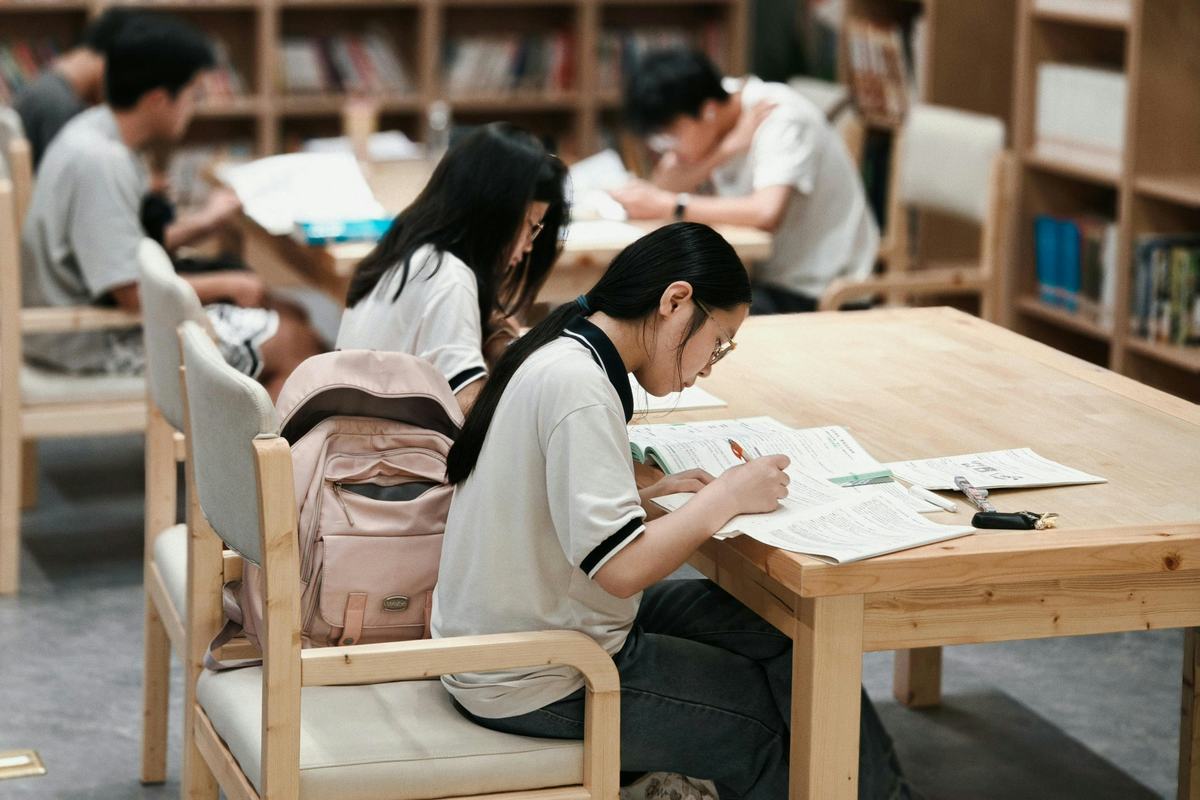
Studying in China gives you more than a degree: you come back with Chinese and first-hand experience of the country. And China matters to many employers: it is the world’s second-largest economy and its largest exporter of goods. No degree guarantees a job, but this one can set you apart wherever your work touches China. For more on Chinese at work, see why learn Chinese.
Culture and food
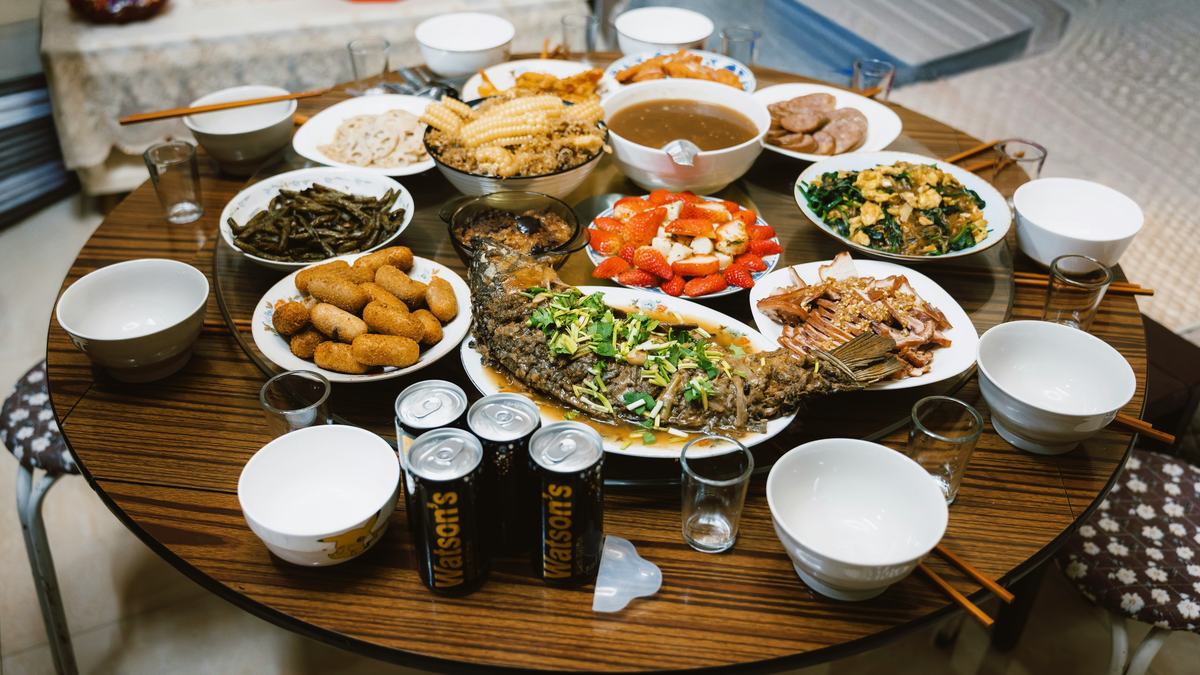
China’s culture is all around you, not only at its 61 UNESCO World Heritage sites, such as the Forbidden City and the Terracotta Army. You see festivals like the Spring Festival and the Mid-Autumn Festival as the people who celebrate them do, and the food changes from region to region: the numbing spice of Sichuan, the chillies of Hunan, the dim sum of Guangdong, the hand-pulled noodles of Lanzhou. And about 50,000 km of high-speed railway puts much of it a weekend away.
How to apply
First, choose the kind of programme:
- A degree taught in Chinese. The widest choice of subjects, but you need Chinese to get in: see how much Chinese you need.
- A degree taught in English. A smaller choice, but you can apply with IELTS or TOEFL instead of the HSK.
- A Chinese language programme. A semester or a year of Chinese classes, with no degree, and open to beginners.
- A short programme. A few weeks of language and culture classes, often in the summer.
Then apply to the university, on its own international admissions website, and, if you want one, for a scholarship: see below. Universities ask for your passport, your diplomas and transcripts, a language certificate and, for graduate study, a study plan and letters of recommendation. Most programmes start in September, and applications open the autumn before. Every university sets its own dates and rules, so check its admissions website. Here is one university’s:
An example: Tsinghua’s undergraduate admissions for September 2027
- Language: programmes taught in Chinese ask for HSK 5 or above, with more than 60 points in each part.
- 30 September to 20 November 2026: first round of applications; results in January 2027.
- 21 November 2026 to 28 February 2027: second round; results in early May 2027.
- After admission: the university sends the admission notice, the JW202 visa form and the medical examination form.
- Before you travel: apply for an X1 visa at a Chinese embassy or consulate.
- Within 30 days of arriving: apply for a residence permit.
Scholarships
The largest is the Chinese Government Scholarship, run by the China Scholarship Council (CSC). A full award pays your tuition, a room on campus or a housing allowance, medical insurance and a monthly allowance: RMB 2,500 for undergraduates, 3,000 for master’s students and 3,500 for PhD students. You apply in one of two ways, both through the CSC’s website, campuschina.org: through your own country, where an agency for studying abroad, usually the Chinese embassy, collects the applications (the Bilateral Program), or through one of the Chinese universities that run the scholarship (the Chinese University Program). Undergraduates applying for it also need a score from the CSCA, a test run by the China Scholarship Council: mathematics for every programme, physics or chemistry for some, and Professional Chinese for programmes taught in Chinese.
There are others:
| Scholarship | What it is for | How to apply |
|---|---|---|
| International Chinese Language Teachers Scholarship | Students and teachers who plan to work in teaching Chinese: four weeks, a semester or a year of study, or a degree in Chinese language education | On chinese.cn, recommended by a Confucius Institute, an HSK test centre or a Chinese embassy, with HSK scores and, for most tracks, an HSKK (speaking test) score |
| Shanghai and Beijing government scholarships | Students at universities in those cities. Shanghai’s can pay tuition, a room, an allowance and insurance; Beijing’s pays tuition | Through your university |
| University scholarships | Students admitted to that university | On the university’s admissions website |
| Schwarzman Scholars | A one-year master’s in global affairs at Tsinghua, fully funded | On its website |
| Yenching Academy | A two-year master’s in China studies at Peking University, with a fellowship for tuition, housing and a monthly stipend | On its website |
Which of these you can apply for depends on your passport. Each country has its own places and deadlines for the Chinese Government Scholarship: the Chinese embassy in Indonesia, for example, takes applications for 2027 until 14 February 2027. Some routes are only for one region: citizens of the European Union, for instance, also have the EU Window. Ask the Chinese embassy in your country what is open to you.
The student visa
To study in China you need a student visa, the X visa: an X1 for a programme of more than 180 days, or an X2 for 180 days or less. You apply at the Chinese embassy or consulate in your country, or its visa centre, with your passport and the admission notice, and for an X1 also the Visa Application for Study in China form, JW201 or JW202, which the university sends you with the notice. Some embassies also ask for a medical examination record.
With an X1 visa, you must apply for a residence permit within 30 days of arriving, at the local exit-entry office; your university’s international office helps you with it. The permit is what lets you stay for your studies.
The visa-free entry that many nationalities now have for up to 30 days (see the travel section of why learn Chinese) covers study tours such as summer and winter camps, but not study itself: for a semester or a degree you need the X visa.
A student residence permit is not a work permit. International students may do work-study, but may not take a job or run a business, and work-study or an internship off campus needs your university’s consent and a note on your residence permit. Rules change and differ between countries, so check with the embassy or consulate that will issue your visa.
How much Chinese do you need?
More than many applicants expect. China’s Ministry of Education sets the levels in its 2018 quality standard for international students in higher education, still the national rule. Universities write them as levels of the old HSK, with its word counts:
| Degree | To get in | To graduate |
|---|---|---|
| Taught in Chinese | HSK 4 (1,200 words) | HSK 5 (2,500 words) |
| Taught in English: bachelor’s | English, set by the university | HSK 4 (1,200 words) |
| Taught in English: master’s or PhD | English, set by the university | HSK 3 (600 words) |
Each degree should also make a course on China compulsory, and universities should offer enough Chinese classes. The standard has a five-level scale of its own, which the HSK’s organisers match to the old exam: levels 3 and 4 are HSK 3 and 4, and level 5 is HSK 5 or 6. Universities can ask for more: Tsinghua wants HSK 5 to start a degree taught in Chinese. And they enforce it: China Pharmaceutical University’s notice of November 2025 asks English-taught master’s and PhD students to pass HSK 3 with at least 180 points before they graduate.
The standard sets no level for exchange semesters or other study that doesn’t lead to a degree. Even then, some Chinese changes your stay: you can talk with classmates and neighbours, order in the canteen and find your own way around, and you see the country from the inside rather than as a visitor.
Before you book a test, check two things:
- Which HSK. The new HSK officially launches on 13 December 2026, and its levels are bigger: HSK 4 asks for 2,000 words, against 1,200 in the old exam. A requirement such as “HSK 4 with 180 points” refers to the old exam, scored out of 300, and the new exam’s pass marks have not been published yet. Ask the university which version it accepts.
- How recent. Chinese Testing International, which runs the HSK, counts a score as valid for two years.
Scholarships for studying Chinese, such as the International Chinese Language Teachers Scholarship, usually want an HSKK score too, from the HSK’s speaking test. As for time: at 10 new words a day, the new HSK 4’s 2,000 words take about seven months and HSK 5’s 3,600 about a year, plus everything else a level asks for (see how long each level takes).
Chinese for your first weeks
You’ll meet these from the day you register, on forms, on signs and in the group chat for your class.
| Chinese | Meaning |
|---|---|
| 留学生 liúxuéshēng | international student The newer official word is 国际学生 guójì xuéshēng. |
| 录取通知书 lùqǔ tōngzhīshū | admission notice You need it to apply for your visa. |
| 签证 qiānzhèng | visa |
| 体检 tǐjiǎn | medical examination |
| 居留许可 jūliú xǔkě | residence permit |
| 报到 bàodào | to register on arrival Your first stop on campus, with your passport and admission notice. |
| 宿舍 sùshè | dormitory |
| 食堂 shítáng | canteen |
| 饭卡 fànkǎ | canteen card Many campuses use one card, 一卡通 yìkǎtōng, for meals, the library and doors. |
| 选课 xuǎnkè | to choose your courses |
| 学分 xuéfēn | course credit Each course is worth some, and a degree needs a set number. |
| 学费 xuéfèi | tuition fees |
| 奖学金 jiǎngxuéjīn | scholarship |
Getting ready with Hanzio
Hanzio has a deck for every HSK level, old and new, so you can learn the words your programme asks for. Add one, and the daily plan gives you a few new words each day and brings each one back just before you would forget it. For HSK 1 there is also a course of grammar lessons and short stories.
Every word in the table above is in Hanzio’s dictionary, with its sound. And once you are in China, take a photo of a notice, a form or a menu, or pick one you took, and the camera scan looks up the Chinese in it.
Start your Chinese before you go
Frequently asked questions
Is it expensive to study in China?
Much less than at many top universities, though it isn’t free. Tsinghua charges international undergraduates RMB 26,000 to 40,000 a year for most programmes taught in Chinese, about US$3,900 to 6,000, against US$65,670 at the University of Pennsylvania. Living costs are lower too: a double room on Tsinghua’s campus costs RMB 40 a day. Programmes taught in English can cost more, and universities outside the biggest cities can cost less.
Can I study in China in English?
Yes: many universities teach some degrees in English, and if English is not your first language you usually apply with IELTS or TOEFL instead of the HSK. But on a degree you will need some Chinese too: under China’s Ministry of Education standard, students on English-taught bachelor’s degrees should reach the level of HSK 4 by graduation, and master’s and PhD students HSK 3, on the old exam’s scale. The standard sets no level for exchange semesters or other study that doesn’t lead to a degree, though even a little Chinese makes daily life there easier.
Do I need the HSK to study in China?
For a degree taught in Chinese, yes: Tsinghua, for example, asks for HSK 5 or above. For a degree taught in English you usually apply with an English test instead, but you usually need an HSK level to graduate. Chinese language programmes take beginners.
How do I get a Chinese Government Scholarship?
Apply on campuschina.org, either through your own country, where the Chinese embassy usually collects applications (the Bilateral Program), or through a Chinese university that runs the scholarship (the Chinese University Program). A full award pays tuition, a room, medical insurance and RMB 2,500 to 3,500 a month.
What visa do I need to study in China?
An X1 visa for a programme of more than 180 days, or an X2 for 180 days or less. Apply at a Chinese embassy or consulate with your admission notice and, for an X1, the JW201 or JW202 form from your university. With an X1, apply for a residence permit within 30 days of arriving.
What about Hong Kong and Taiwan?
Both have their own systems. Hong Kong’s universities have their own student visa and charge non-local students much more (from HK$250,000 a year for undergraduates at the University of Hong Kong), and everyday life there is in Cantonese. Taiwan has its own scholarships and its own Chinese exam, the TOCFL, and writes traditional characters: see simplified vs traditional Chinese.